



Implementing an Enterprise Resource Planning (ERP) system is more than a software upgrade — it’s a strategic move that reshapes how your business operates, grows, and competes.
This guide shares 10 best practices that CEOs, CFOs, and CTOs should follow to ensure their ERP project delivers maximum business value.
Best Practice 1: Align ERP with Business Strategy
ERP should enable your business vision, not just automate processes. Make sure the system supports both current needs and long-term goals like expansion, digital transformation, or M&A readiness.
Best Practice 2: Understand the True Cost of Ownership
Best Practice 3: Plan for Scalability from Day One
Choose a platform that grows with you. Multi-subsidiary, multi-currency, and global functionality are key for businesses aiming to expand.
Best Practice 4: Prioritize Seamless Integration
An ERP should be the hub of your business, connecting CRM, HR, payroll, and industry apps. Integration prevents data silos and ensures a single source of truth.
Best Practice 5: Demand Real-Time Insights
Best Practice 6: Ensure Compliance and Security
Best Practice 7: Build for Flexibility and Change
Best Practice 8: Choose the Right Partner for Support
Best Practice 9: Assess Vendor Roadmap and Innovation
Best Practice 10: Learn from Industry Success Stories
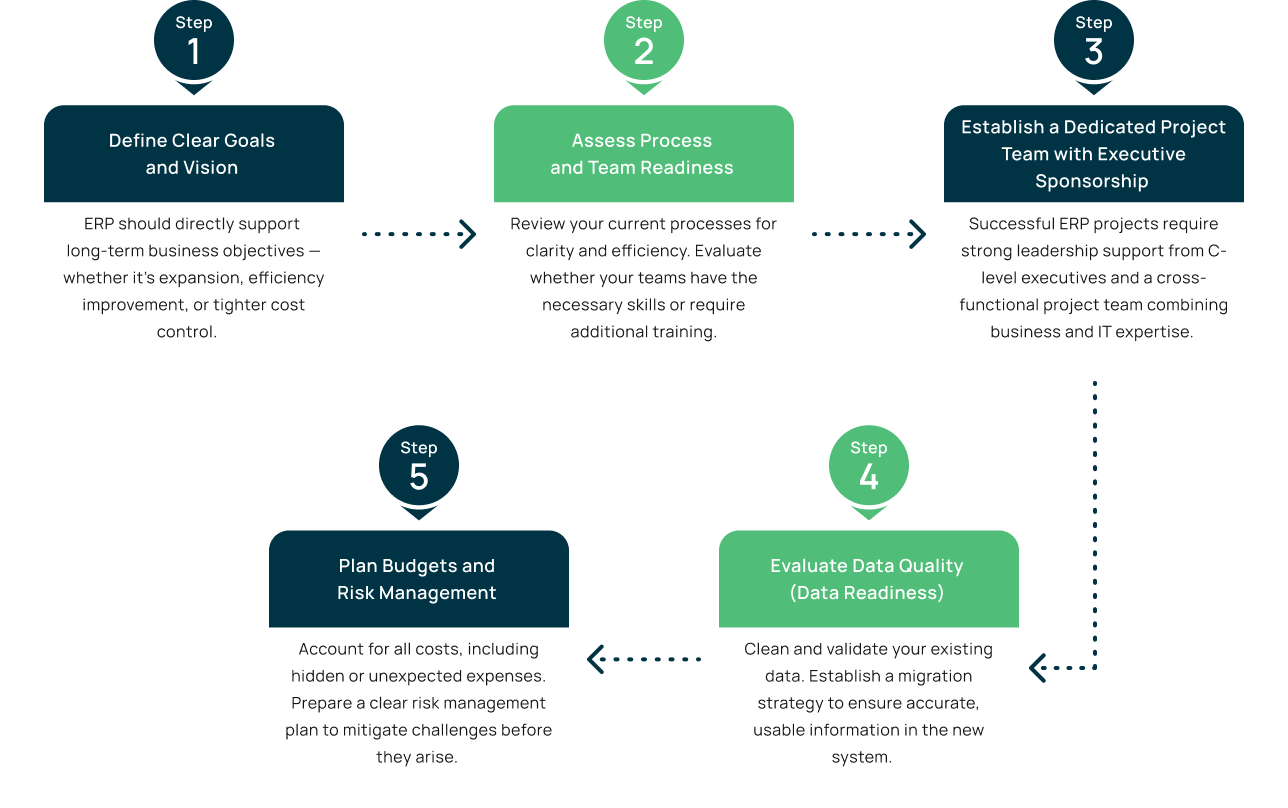
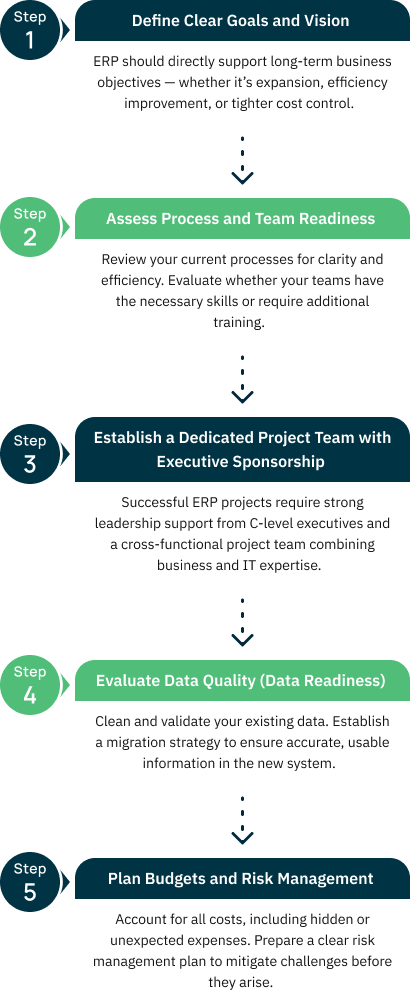
Preparing for ERP: Readiness Before You Begin
Pitfalls to Avoid
- Choosing ERP based on trends, not strategy – Selecting a system just because it’s popular, rather than ensuring alignment with your business goals.
- Underestimating the total cost of ownership (TCO) – Focusing only on license fees while overlooking implementation, training, support, and upgrade costs.
- Neglecting change management – Failing to prepare employees and stakeholders for new processes, which often leads to resistance and poor adoption.
- Over-customization – Relying too heavily on customizations that make the system complex, costly, and difficult to upgrade in the future.
- Selecting an unreliable vendor or partner – Choosing a provider without proven expertise or industry knowledge can result in delays, instability, and even project failure.
Conclusion
ERP implementation is a journey, not a one-time project. By following these best practices, you can reduce risks, accelerate ROI, and ensure your ERP system becomes a powerful growth engine for your business.
📞 Ready to take the next step?

Jessica has a Bachelor of Arts degree from Trent University and a Masters degree from Cambridge University. He is an Adjunct Professor of Finance at Simon Fraser University’s Beedie School of Business and is both a Canadian Chartered Professional Accountant and a UK Chartered Accountant.
Jessica has a Bachelor of Arts degree from Trent University and a Masters degree from Cambridge University. He is an Adjunct Professor of Finance at Simon Fraser University’s Beedie School of Business and is both a Canadian Chartered Professional Accountant and a UK Chartered Accountant.